۱.
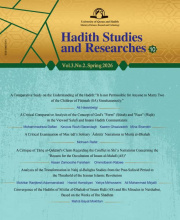
The Sermon of Shiqshiqīyyah is one of the famous sermons of Nahj al-Balāghah . Throughout history, there have been numerous discussions and studies regarding this sermon, both in terms of its text and its sanad (chain of transmitters). The text of the sermon and the abundance of these studies indicate that from the very first moments of its issuance, these words of the Prophet were noticed by the people and had a significant impact on both present and absent listeners. On the other hand, "Rhetoric" as a form of eloquence and public speaking has been prevalent since the time of Plato and examines how speech influences and persuades the audience. The study of rhetoric investigates how a "Rhetor" or speaker engages the audience and convinces them of their viewpoint. The present study, with a descriptive-analytical method, aims to answer the question, ‘From the perspective of the science of rhetoric, what persuasive techniques are employed in the Sermon of Shiqshiqīyyah ?’ Analyzing the Sermon of Shiqshiqīyyah from the perspective of rhetoric shows that all the main elements, including "Ethos," "Pathos," and "Logos," have been carefully observed in the Prophet's speech. This is indicative of the fact that delivering such words at this level of rhetorical and eloquent knowledge is only possible for an infallible being.
۲.
The writings of Shaykh Ṣadūq (d. 381 AH) increasingly contain narrations from " Faḍl ibn Shādhān "(d. 260 AH) from Imam Riḍā (AS). Over the past centuries, theologians and jurists have relied on these reports as a basis for their arguments and interpretations in theological and jurisprudential matters. However, Professor Muḥammad Baqir Behboudi, citing the Rijāl of Kashshī and Ṭūsī , claims that " Ibn Shādhān "was born after the martyrdom of Imam Riḍā (AS) and thus considers those narrations to be unreliable. In his view, the responsibility for attributing the narration of " Faḍl " from Imam Riḍā (AS) lies with " ʻAlī ibn Muḥammad ibn Qutayba ," whom he deems to be a false and untrustworthy individual. In contrast, the author of this article, through a review of the Rijāl of Kashshī and Ṭūsī and other sources, and by considering various evidences, reaches a different conclusion in both areas, positing that Ibn Shādhān was born around the year 180 AH or earlier, which would allow for the possibility of reporting from Imam Riḍā (AS) (who died in 203 AH). Moreover, the reports from " ʻAlī ibn Muḥammad ibn Qutayba "recognized as a Shiʻa narrator and theologian contemporary with Imam Hādī and Imam ʻAskarī (AS), are transmitted in " Tehdhīb al-Aḥkām ," " al-Istibṣār ," " Man Lā Yaḥḍuruhul Faqīh ," and the writings of Shaykh Ṣadūq as well as other foundational Hādīth sources. The author, through a deep exploration of the statements of Kashshī, Najāshī, Ṭūsī, Ḥillī , and other experts in the field of Rijāl such as Mirdāmād, Wahid Behbahani, Shūshtarī, and Zanjani, firmly establishes that " Ibn Shādhān "is a highly esteemed scholar, trustworthy, and one of the eminent luminaries of the Ahl al-Bayt school of thought.
۳.
The theory attributed to Ayatollah Boroujerdi, which considers Shiʻa jurisprudence as marginal to Sunni jurisprudence, is a matter of dispute among jurists. In some interpretations, the scope of this view has extended beyond Shiʻa jurisprudence and has been discussed regarding Shiʻa hadith as well; meaning that Shiʻa hadith is seen as marginal to Sunni hadith and has been influenced by it. In this case, understanding the validity of this theory is an important issue. The present study aims to demonstrate ‘What arguments and evidence exist to support the theory of the marginality of Imamiyyah hadith?’ and ‘What interpretation of it can be presented?’ Clarification regarding the doubts about the impact of Shiʻa hadith necessitates research on this hadith issue. The innovative approach of this research is historical phenomenology, which, according to the author, through recounting the context of the emergence of several hadiths from the chapter on inheritance in Imamiyyah jurisprudence, depicts facets of the historical realities governing Imamiyyah hadith and explains the validity of this theory. According to the author’s explanation, this marginality evokes the tradition of jurists annotating other viewpoints and indicates that some foundational Imamiyyah hadiths emerged in response to, confrontation with, and correction of the views of the general populace.
۴.
A well-known saying in Nahj al-Balāghah attributed to Imam Ali (AS) states that feminine morality is distinguished from and at times conflicts with masculine morality. According to this saying, the three traits of arrogance, fear, and stinginess are considered the worst vices for men and the best virtues for women. If this statement holds true, it implies the existence of two different moral systems for women and men, which is inconsistent with certain moral teachings of the Quran. Past commentators on Nahj al-Balāghah , influenced by the prevailing beliefs of their time, accepted the content of this statement as correct and passed over it without much scrutiny. However, contemporary interpreters and commentators have sought to defend the validity of this saying by either changing the meanings of these traits or limiting their scope. Nonetheless, these defenses often raise multiple issues and create new problems instead of resolving the existing ones. Therefore, the author examines and analyzes this alleged hadith, assessing its validity from a different perspective. To do this, the author first reviews the sources where this saying is mentioned for the first time and conducts a textual analysis of their chains of narration. Then, the intrinsic meaning of the hadith is analyzed, and the strength of its arguments is evaluated. In the next step, based on biological findings that some commentators have utilized, the claim of distinction is scrutinized. Finally, the difficulties that this saying faces from both an intra-religious and an ethical perspective are articulated, and its credibility is challenged.
۵.
There is no doubt among Islamic scholars about the universality and eternity of the Holy Quran. There is also no doubt about the comprehensiveness of the Quran, although scholars do not universally agree on its types and scope. What can guarantee the presence of this sacred text across all times, societies, and aspects is the Quran's responsiveness and its ability to solve human problems and concerns, since anything that does not benefit humanity will undoubtedly be discarded. Given this importance, the significance of "Interrogation" becomes clear, as it is considered the only way to answer human questions and address contemporary concerns. So, the Impeccable Imams (AS) frequently spoke about interrogation. According to the view of Martyr Ṣadr, which aligns with the narrations, interrogation has three stages: 1) Understanding the societal concern and question, which he refers to as the "Subject," 2) Presenting the question and concern to the Quran, 3) Extracting and elevating the response from the Quran. The present study aims to explain this scope and method based on the narrations of the Ahl al-Bayt (AS) through an analytical-descriptive approach and to clarify the differences between this important method and others, such as the method of interpreting the Quran with the Quran and thematic interpretation methods. It will also demonstrate the significant difference between the method of interrogation and "Interpretation by opinion," which some have mistakenly believed to be the same, and address the doubt of "Limiting interrogation to the Impeccable Imams". It seems that the endless capacity of the Quran is its most significant miraculous aspect because it is a legislative book, and like the book of creation, its secrets are inexhaustible.
۶.
The Exegesis known as the Qummī exegesis is attributed to Ali ibn Ibrāhīm ibn Hāshim Qummī . This exegesis dates back to the fourth century and is regarded as a narrative commentary among Shiʻa exegesiss. The numerous traditions quoted in this exegesis lead any audience to conclude its narrative nature; however, a thorough and critical examination does not support this judgment. In this exegesis, attention has also been paid to the Quranic exegesis method, along with the interpreter’s use of contemporary knowledge to understand the verses, as well as significant literary resources. This indicates that the Qummī exegesis departs from solely being narrative. The present study aims to briefly present examples of what distinguishes this exegesis from purely narrative commentaries and to demonstrate the various and recurring literary and rhetorical knowledge utilized by the interpreter to provide evidence of Ijtihād within the Qummī exegesis.